
Top Signs You Need Garage Door Service — Don’t Ignore These
That grinding noise your garage door has been making for months isn’t just a quirk; it’s a roller or hinge signaling exactly which part is about to fail, usually at 7 a.m. when you’re already running late. Most homeowners dismiss these sounds and subtle operational changes as normal wear and tear, but they’re actually a diagnostic language that, when understood, can prevent costly emergencies and safety hazards. Ignoring these early warnings in a place like Port Charlotte, where the humid air can accelerate corrosion, is a gamble you don’t need to take with your home’s security and your daily routine.
Decoding Garage Door Sounds: What Your Door is Trying to Tell You
The symphony of sounds your garage door makes is a direct indicator of its internal health. For instance, a persistent squealing, especially when the door moves, often points to dry or worn-out rollers and hinges. These components need lubrication regularly, and in the salty air common near the coast in Port Charlotte, this maintenance is even more critical. Ignoring squealing can lead to rollers seizing up, causing damage to the tracks or even the door panels themselves.
A much more concerning sound is grinding. This isn’t just a louder squeal; it’s a harsh, metallic scraping that typically signals a problem with the opener’s internal gears or, more commonly, a roller that’s completely off its track or severely damaged. If you hear grinding, stop using the door immediately and call for service. Continuing to operate the door can strip gears in your LiftMaster or Genie opener, leading to a much more expensive repair than addressing a simple roller issue.
Rattling can indicate loose hardware – screws, bolts, or brackets that have vibrated free over time. While seemingly minor, a loose bracket can compromise the entire structural integrity of the door section it’s attached to. Popping or snapping noises, particularly when the door is in motion, are often a red flag for worn-out or broken torsion springs. These springs are under immense tension, and a snapping sound means they’re nearing the end of their life or have already failed, posing a serious safety risk. Finally, banging sounds usually mean something is out of alignment or a component is hitting another as the door moves, often a sign of a track issue or a roller that’s come loose.
Movement Irregularities: When Your Door Doesn’t Move Right
Beyond the sounds, how your garage door moves is a critical diagnostic tool. A jerky or uneven operation is a clear sign that something is binding or misaligned. This could be a bent track, a damaged roller, or even a cable that’s starting to fray or come off its pulley system. We see this often in Port Charlotte homes where the constant humidity can cause metal components to warp or seize up. If your door is stuttering its way up or down, it’s not just an annoyance; it’s a mechanical cry for help.
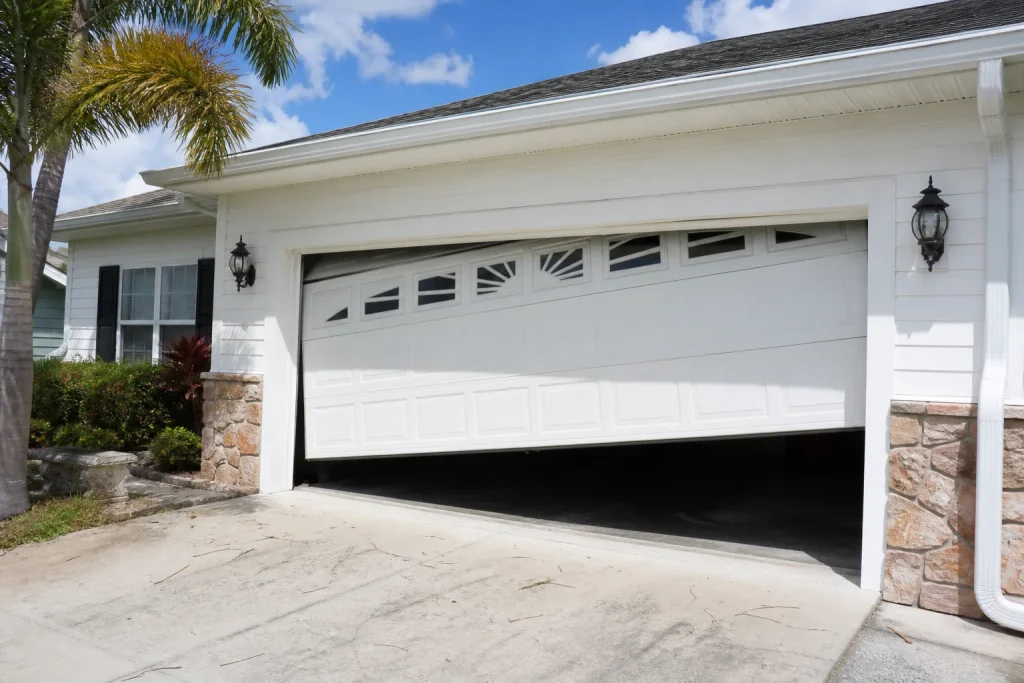
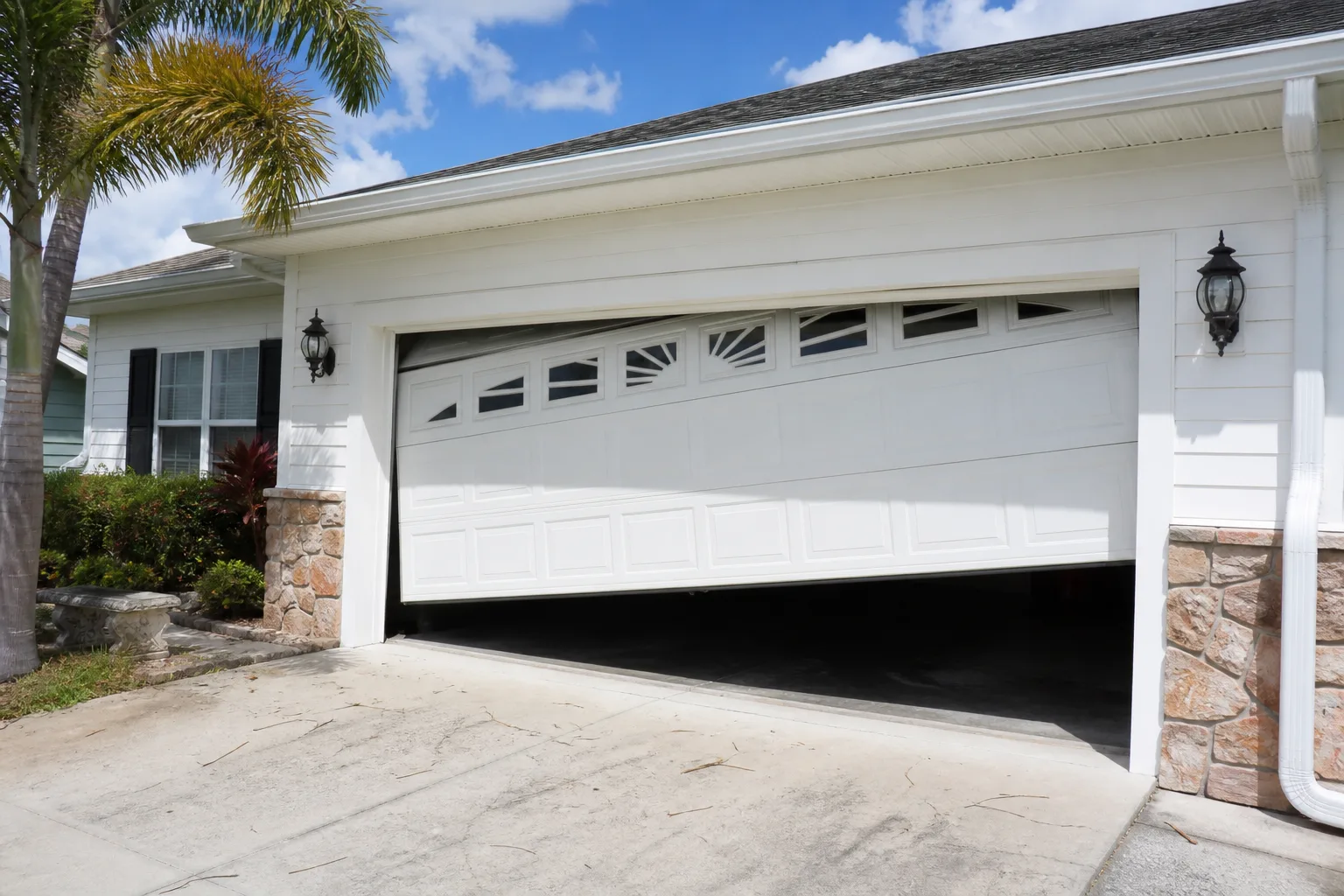
A door that rises or falls unevenly is another significant concern. This almost always points to a problem with the torsion springs or the counterbalance cables. These systems are designed to work in tandem to make the heavy door manageable for the opener and for manual operation. If one side is lifting or lowering faster than the other, it means the spring tension is unequal, or a cable is loose, damaged, or off its drum. This imbalance puts undue stress on the opener motor and can lead to catastrophic failure or, worse, the door dropping unexpectedly.
Slow response time from the opener is another symptom that shouldn’t be ignored. While you might attribute it to the opener being old, a sluggish response, especially in the Port Charlotte heat, can indicate an opener motor that’s struggling. In our humid climate, motors can overheat more easily. A door that’s slow to respond might be an opener motor that’s about to burn out due to excessive strain, a problem that could have been prevented by addressing a stiff roller or an unbalanced door. We’ve seen many Chamberlain and Craftsman openers fail prematurely because the underlying door issue wasn’t addressed.
Visual Clues: Rust, Corrosion, and Wear You Can See
Don’t underestimate what you can see when you take a close look at your garage door system. For homeowners in Port Charlotte, rust and corrosion are common adversaries. Pay close attention to the torsion springs, which are typically mounted above the door. If you see significant rust or pitting on these heavy-duty coils, it’s a clear sign they’re degrading and their lifespan is significantly reduced. In our coastal environment, these springs can lose their integrity much faster than in drier climates. What looks like surface rust today could mean a spring failure in a matter of weeks, not years.
Similarly, inspect your counterbalance cables. These thick steel cables run from the bottom corners of the door up to the spring system. Look for any signs of fraying, corrosion, or kinks. A frayed cable is a serious safety hazard, as it’s under extreme tension and can snap. If you see any of these visual indicators, it’s time to schedule a professional inspection. We often find that homeowners in areas like Port Charlotte underestimate the impact of salt air and humidity on these critical components.
Also, examine the rollers themselves. Are they cracked, bent, or showing signs of excessive wear? Are the bearings within the rollers seized or rusted? Worn rollers don’t just make noise; they can cause the door to bind, damage the tracks, and put extra strain on the opener. Keeping an eye on these visual cues can help you catch problems before they become major failures. We service all major brands, from Clopay and Amarr doors to LiftMaster openers, and seeing these signs is a consistent predictor of needing prompt attention.
The Critical Safety Test: Your Monthly Auto-Reverse Check
One of the most vital, yet often overlooked, safety features of your garage door opener system is its auto-reverse function. This is designed to stop and reverse the door’s motion if it encounters an obstruction, preventing injuries to people or damage to property. You should perform this simple test every month. To do it, place a 2×4 piece of lumber flat on the ground in the door’s path. Close the door; it should stop and reverse upon contact with the board. If it doesn’t reverse, or if it reverses slowly and weakly, your opener’s safety mechanism is compromised.
A failed auto-reverse test is not something to delay fixing. It means your garage door could potentially close on a child, a pet, or even your car, causing serious harm or damage. This issue could stem from a faulty safety sensor, an improperly adjusted opener force setting, or a problem with the opener’s logic board. In Port Charlotte, where families are active outdoors, ensuring this safety feature is functioning perfectly is paramount. We’ve seen too many near-misses because this simple test was forgotten. Don’t wait for an accident to happen; if your door fails this test, it needs immediate attention from a qualified technician.
When Performance Drags: Slow, Sticky, or Uneven Operation
A garage door that feels unusually heavy to lift manually, or one whose opener struggles to lift it, is a strong signal of an imbalance in the spring system. The torsion springs are designed to do the heavy lifting, making the door feel nearly weightless. If you notice increased resistance or the door feels significantly heavier, it’s a sign that the springs are losing tension or have broken. This is particularly important in Port Charlotte because the temperature fluctuations, even within our generally warm climate, can affect the metal of the springs and their ability to maintain consistent tension.
Conversely, a door that feels “sticky” or hesitates during its travel might indicate friction points. This could be due to rollers that are worn or not properly seated in their tracks, or tracks that have become bent or obstructed. We often find that debris, like sand from our local beaches, can get lodged in the tracks, causing them to bind. Regular cleaning and maintenance of the tracks and rollers can prevent this stickiness. If the problem persists, it’s a sign that a component may be damaged and needs replacement.
An opener that sounds like it’s straining or working harder than usual is also a key indicator. This strain is often a direct result of the door being unbalanced or the rollers and tracks not operating smoothly. The opener is designed to assist the spring system, not to do all the work. When the door is improperly balanced, the opener motor has to compensate, leading to premature wear and tear. This can shorten the lifespan of your Wayne Dalton or Raynor opener significantly.
The Bottom Line
Your garage door is a complex piece of machinery that provides crucial security and convenience. Paying attention to the subtle (and not-so-subtle) signs it gives you – from strange noises and jerky movements to visible rust and failed safety tests – can save you from significant inconvenience, expense, and potential hazards. For homeowners in Port Charlotte, understanding these signals and acting promptly is key to maintaining a safe and functional garage door system. If you’re experiencing any of these issues, or simply want to ensure your door is in top condition, don’t wait for a complete breakdown.
If you’re in Port Charlotte and need help identifying or fixing these signs, Reliable Garage Door Service Port Charlotte offers free estimates and expert diagnosis. Call us today at (855) 955-0389.
Frequently Asked Questions
What does a loud grinding noise from my garage door mean?
A loud grinding noise from your garage door typically indicates a problem with the opener’s internal gears or a roller that is off its track or severely damaged. This sound signals that you should stop using the door immediately to prevent further damage, especially to the opener system.
How often should I lubricate my garage door rollers and hinges?
We recommend lubricating your garage door rollers and hinges at least twice a year, and more often if you live in a humid or coastal environment like Port Charlotte. This helps prevent squeaking and ensures smooth operation, extending the life of these components.
My garage door opener is slow to respond, what could be the issue?
A slow response from your garage door opener can be due to several factors, including an unbalanced door system putting extra strain on the motor, or the motor itself overheating due to the strain or ambient temperature, which is common in Port Charlotte’s warmer months. It can also indicate an opener that’s nearing the end of its lifespan.
What is the most important safety test for my garage door?
The most important safety test for your garage door is the monthly auto-reverse test. This ensures that the door will stop and reverse if it encounters an obstruction, preventing potential injuries or damage. If your door fails this test, it needs immediate professional attention.
Written by the team at Reliable Garage Door Service Port Charlotte, serving Port Charlotte since 2020.
Need Garage Door Help?
Call Reliable Garage Door Service Port Charlotte — licensed & insured, here with fast after-hours help in Port Charlotte.
(855) 955-0389