
Quick Summary
Standard new garage door prices generally range from $1,000 to $2,500 with professional installation, though total costs can exceed $5,000 depending on sizing, thermal insulation, and structural reinforcements. Reliable Garage Door Service Port Charlotte highlights that factoring in coastal wind-load ratings, corrosion-resistant hardware, and high-cycle springs protects against unexpected maintenance and extreme weather demands. Homeowners will understand how to accurately assess itemized estimates to avoid hidden fees and request a transparent, customized quote for their property.
What Are Real New Garage Door Prices and Installation Costs?
When you start shopping for a replacement, published new garage door prices can feel confusing. National pricing guides show that the standard residential garage door replacement cost averages around $1,231, with most standard jobs falling between $754 and $1,707. However, those broad figures do not always tell the whole story.[1]
A bare-bones, non-insulated door purchased off the shelf can start around $400, while premium materials, hurricane-rated reinforcement, and custom architectural designs can exceed $10,000. On top of the physical door, professional labor generally adds $200 to $500 (averaging about $350 per door). According to the team at Reliable Garage Door Service Port Charlotte, here is a clear breakdown of what you can actually expect to pay for parts, labor, and regional requirements so you can plan your budget with confidence.
What Is the Average Cost of a New Garage Door with Professional Installation?
The total cost of a new garage door with installation comes down to two main components: the door package itself and the labor required to balance and mount it safely. While standalone door panels range from $400 for basic single-layer steel up to $10,000 or more for custom wood or full-view glass, the majority of standard residential installations fall into the $1,000 to $2,500 range.[2]
Single-Car vs. Double-Car Door Pricing Breakdown
Size is the most direct pricing factor. A single-car garage door (usually 8×7 or 9×7 feet) requires fewer materials, lighter-duty springs, and less installation time than a 16×7-foot double door. When you add high-grade insulation or storm-rated structural bracing, double doors require significantly stronger hardware to support the added weight.
Note: The following price ranges are illustrative estimates; actual pricing varies based on local market rates, door materials, and manufacturer options.
| Door Type (Illustrative Examples) | Typical Dimensions | Estimated Door-Only Cost | Installed Price Range |
|---|---|---|---|
| Standard Single-Car (Non-Insulated) | 8×7 or 9×7 ft | $400 – $800 | $650 – $1,300 |
| Insulated Single-Car (R-8 to R-12) | 8×7 or 9×7 ft | $700 – $1,400 | $950 – $1,900 |
| Standard Double-Car (Non-Insulated) | 16×7 ft | $700 – $1,500 | $1,000 – $2,000 |
| Insulated Double-Car (Steel Sandwich) | 16×7 ft | $1,200 – $2,800 | $1,550 – $3,300 |
| Reinforced Impact / Wind-Rated Double | 16×7 ft | $2,000 – $5,000+ | $2,400 – $5,500+ |
| Custom Wood or Full-View Aluminum | Custom sizes | $3,500 – $10,000+ | $4,000 – $11,000+ |
Labor Rates and Complete Installation Scope
Professional installation typically accounts for $200 to $500 of your total invoice. Paying for skilled labor covers the assembly, balancing, and safe mounting of the system. Typical installation tasks generally include:
- Tear-down and disposal of old panels, cables, and worn hardware.
- Aligning, leveling, and securely fastening track assemblies to framing.
- Mounting and properly tensioning counterbalance spring systems.
- Hanging panels, attaching hinges, and installing rollers.
- Connecting opener mechanisms and testing safety sensor alignment.
- Installing perimeter weatherstripping and bottom seals.
How Do Regional Wind-Load and Climate Factors Affect Pricing?
National pricing calculators often vary from costs in coastal and high-wind regions. In areas with strict building codes, doors must meet specific wind-load standards to withstand high wind pressures.
Impact Ratings and Wind-Code Upgrades
Wind-rated garage doors feature heavier steel tracks, internal or external reinforcement struts, heavy-duty jamb brackets, and impact-resistant glass if windows are included. Because these doors are engineered for severe pressure changes, hardware and manufacturing costs are generally higher than standard units.
| Component | Standard Residential Door | Wind-Code / Impact-Rated Door |
|---|---|---|
| Track Construction | Standard residential gauge steel | Heavier-gauge steel with reinforced brackets |
| Horizontal Struts | None or light single strut | Integrated reinforcement struts or U-bars |
| Spring System | Standard residential spring capacity | Higher-capacity torsion springs calibrated for reinforced doors |
| Hardware & Rollers | Standard residential hinges and rollers | Heavy-duty hinges and reinforced steel or nylon rollers |
Thermal Protection and Salt-Air Corrosion
If your garage faces direct afternoon sun or shares walls with living areas, an uninsulated steel door can allow substantial heat transfer. Choosing an insulated garage door helps regulate garage temperatures, reducing thermal strain on adjacent rooms.
For homes in coastal or humid environments, hardware longevity is an important factor. Salt air can accelerate corrosion on exposed steel hardware. Selecting galvanized or coated hardware, corrosion-resistant lift cables, and sealed rollers adds a modest upfront cost but helps extend system lifespan.
Which Hardware Components Influence Long-Term Costs?
Need new garage door prices?
We’re available now — call for a fast, free estimate.
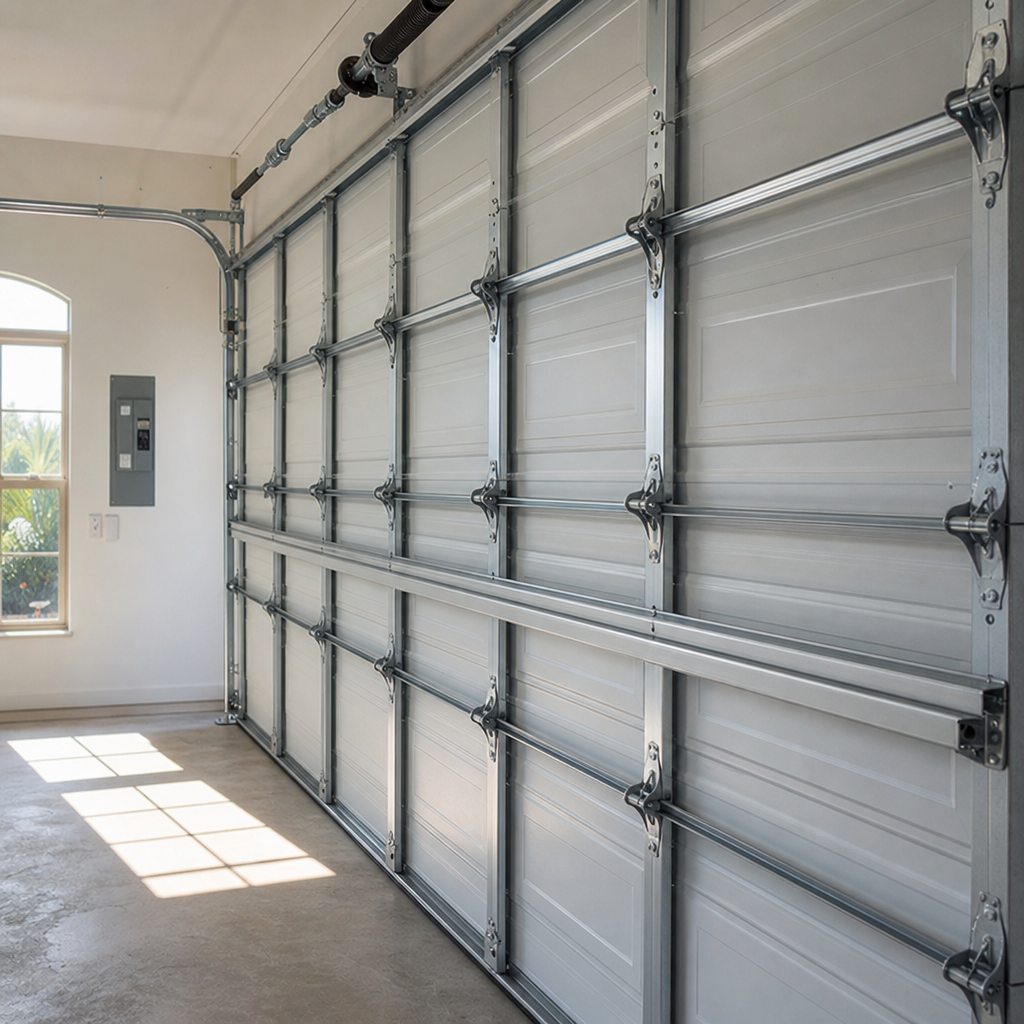
A garage door is a primary moving mechanical system in the home. As noted by Reliable Garage Door Service Port Charlotte, choosing appropriate hardware components helps ensure reliable operation and lower maintenance costs over time.
High-Cycle Springs vs. Entry-Level Hardware
Springs are rated based on expected operational cycles. Upgrading to higher-cycle torsion springs during initial installation typically costs a modest amount more but can significantly extend operating life before a replacement spring is required.
Opener Motor Sizing and Drive Types
Heavier insulated or wind-rated doors generally require appropriately matched opener motor capacities to operate smoothly over time.
Note: Opener specifications below are illustrative guidelines; refer to manufacturer recommendations for exact door weight requirements.
| Door Configuration (Illustrative) | Typical Opener Power Range | Common Drive Types |
|---|---|---|
| Single-car non-insulated | 1/2 HP equivalent | Chain drive or belt drive |
| Double-car standard steel | 1/2 to 3/4 HP equivalent | Belt drive or chain drive |
| Heavy wind-rated / insulated double door | 3/4 HP+ or DC motor equivalent | High-torque DC belt drive or wall-mount jackshaft |
How to Evaluate Installers and Avoid Hidden Fees
When requesting estimates for garage door installation, transparency is essential. To ensure you are getting an honest, fair price, check that your written proposal includes:
- Complete component breakdown: The quote should specify the door model, materials, insulation type, and any applicable wind-load rating.
- Old door removal and disposal: Confirm that taking down and hauling away the old panels and tracks is covered without extra disposal fees.
- New track, springs, and cables: Ensure the estimate includes a complete, properly matched hardware package.
- Permits and local code compliance: In jurisdictions where building permits are required, confirm whether the contractor handles permitting and inspection coordination.
- Clear warranty terms: Look for a distinct written warranty covering both manufacturer parts and installer labor.
Frequently Asked Questions About Garage Door Pricing
How much does a new garage door cost on average?
Nationwide, standard residential replacement averages around $1,231, with most typical single- and double-car installations ranging from $754 to $1,707. If you require specialized hurricane-rated construction, high-density insulation, or custom architectural finishes, total costs can range from $2,400 to over $10,000.
How much does a garage door opener cost to install with a new door?
Adding a new garage door opener during a door installation typically costs between $300 and $650, including the motor unit, safety eyes, wall console, remotes, and labor. Doing both jobs at the same time usually saves money on labor compared to booking separate service calls.
Are insulated garage doors worth the extra money?
Yes. Insulated sandwich-style steel doors are far more rigid and resistant to dents than single-layer steel. In hot climates, they significantly reduce radiant heat transfer into the garage and adjacent rooms, while also operating much more quietly than hollow steel panels.
Do I need a building permit to replace a garage door?
Permit requirements depend on your local municipality and regional building codes. In many coastal or high-wind areas, local jurisdictions may require a building permit and inspection to ensure the door meets structural wind-load requirements. Check with your local building department or a licensed professional such as Reliable Garage Door Service Port Charlotte for specific local rules.
Need new garage door prices?
We’re available now — call for a fast, free estimate.
Sources
- How Much Does Garage Door Replacement Cost in 2026? – libertyhomeguard.com (2026)
- Cost to Replace Garage Door – homewyse.com (2026)
Frequently Asked Questions
How long does a professional garage door installation typically take?
A standard residential garage door replacement usually takes between 3 to 5 hours to complete. Reliable Garage Door Service Port Charlotte handles the entire process within this window, including old door removal, spring balancing, track alignment, and safety testing.
Can I reuse my existing garage door opener with a new door?
You can often keep your current opener if its horsepower rating matches the weight of the new door and safety sensors function properly. However, upgrading to a heavier wind-rated or insulated model may require a higher-torque motor to avoid premature mechanical wear.
What should I do to prepare my garage before installation day?
Clear all vehicles from the driveway and ensure a work perimeter of at least 8 to 10 feet around the garage opening. Removing items stored near the tracks helps technicians safely maneuver heavy panels, balance high-tension springs, and finish the job efficiently.
About the author
 |
Brian Thompson Brian is a certified garage door technician with over eight years of experience serving the Port Charlotte area. He specializes in residential garage door repair and the installation of modern opener systems. Before focusing on garage door mechanics, he earned an Associate Degree in Construction Technology from Florida SouthWestern State College, giving him a strong foundation in building safety and structural integrity. |
Garage door broken, stuck, or off track?
We’re available now — call for a fast, free estimate.
Get Started